

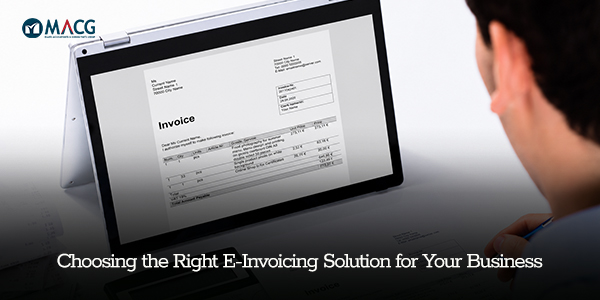
The days of manual data entry, scattered paper trails, and month-end spreadsheet panic are rapidly disappearing. In the modern business landscape, electronic invoicing (e-invoicing) has transitioned from a progressive tech upgrade to a mandatory foundation of corporate compliance.
With strict regulations tightening globally, including mandatory digital reporting, complex integration frameworks, and increasing multi-factor security protocols, selecting your invoicing technology is a high-stakes decision.
An inefficient e-invoicing tool doesn’t just slow down your operations; it exposes your business to blocked tax credits, invoice validation rejections, and severe administrative non-compliance fines. Choosing the right solution requires shifting from a basic feature checklist to evaluating a technology’s structural framework against your actual business workflow.
The Key Features of a Reliable E-Invoicing Solution
When evaluating digital billing tools, avoid generic platforms that treat e-invoicing as an afterthought. A viable, future-proof solution must seamlessly manage data transformation and regulatory handshakes in real time.
Look for these four non-negotiable architectural capabilities.
1. Direct API Integration and Automation
The primary function of modern e-invoicing is converting your transaction data into standardized, machine-readable formats (like structured JSON or XML), pushing it directly to the designated tax portal, and fetching verified digital signatures and secure QR codes instantly.
If your team has to manually export sheets from an accounting tool and upload them through an offline portal every single day, your risk of operational friction and data leakage climbs exponentially. The system must use direct API pathways to execute this loop in the background the moment an invoice is generated.
2. Intelligent Data Validation and Error Handling
Data mismatches are the leading cause of invoice rejection. A high-quality platform runs pre-validation checks before attempting to transmit details to regulatory portals. It should instantly flag invalid tax registration numbers, incorrect tariff/service codes, structural math discrepancies, or duplicate invoice numbering sequences, displaying clear error codes so your billing desk can fix them instantly.
3. Integrated Logistics and Supply Chain Tracking
For companies moving physical goods, invoicing and logistics are inseparable. Your chosen software should allow you to generate an e-invoice and its corresponding digital transport manifest or transit clearance slips simultaneously using a single data payload. Splitting these workflows into separate tasks forces double data entry and increases the risk of transit non-compliance.
4. Bulletproof Security and Multi-Factor Authentication
Tax and transaction records constitute highly sensitive business intelligence. Modern regulatory updates enforce strict Multi-Factor Authentication (MFA) and data encryption protocols for portal access. Your invoicing provider must employ banking-grade security, support secure multi-user role permissions, and cleanly adapt to evolving cyber-security mandates without disrupting daily billing activities.
Assessing Your Business Framework: ERP vs. Standalone
There is no one-size-fits-all software. Your choice depends heavily on your current administrative setup, transaction volume, and operational complexity.
| Solution Type | Best Suited For | Key Advantages | Potential Pitfalls |
| Integrated ERP Modules (e.g., SAP, Oracle, custom ERPs) | Large-scale enterprises, heavy manufacturing, complex supply chains. | Complete ecosystem harmony; automated inventory, ledger, and tax syncing. | High implementation cost; complex customization windows; rigid update cycles. |
| Mid-Market Accounting Suites (e.g., Tally, Zoho, localized packages) | Established SMEs, regional distribution networks, retail chains. | Highly cost-effective; localized tax modules built in; short learning curve. | Limited deep customization if handling highly non-standard billing frameworks. |
| Standalone Dedicated Portals (Cloud Plug-ins & Middlewares) | High-volume transactional businesses needing custom front-ends. | Platform independent; extreme speed; handles bulk micro-transactions smoothly. | Requires careful initial API mapping to push back data to your core accounting ledger. |
Avoiding Post-Implementation Pitfalls
Many organizations choose an invoicing application based purely on aesthetic design or low pricing, only to discover fatal operational bottlenecks during their first high-volume month-end cycle. Ensure your implementation plan addresses these critical operational realities:
- Strict Cancellation Windows: Under many digital tax frameworks, an e-invoice cannot be modified or canceled on the central portal after a brief, strict window (often 24 hours) from its generation time. If errors slip through past this window, managing debit/credit links correctly is crucial to prevent audit flags.
- The Unique Numbering Reset: To remain audit-ready, internal architectures must allow you to systematically track document sequences cleanly across fiscal periods without breaking historic reconciliation lookups.
Final Thoughts
An invoicing tool is ultimately only as strong as the financial and compliance logic backing it up. Technology can automate your workflows, but interpreting evolving statutory shifts, setting up error-free internal tax structures, and maintaining total audit readiness requires a foundation of expert oversight.
For businesses operating in highly regulated, dynamic economic landscapes, navigating this intersection of technical software deployment and statutory corporate compliance can be challenging. This is where partnering with a dedicated regional expert makes all the difference.
Headquartered in Dubai, Maats Auditors and Consultant Group provides specialized, comprehensive financial, auditing, and corporate tax advisory expertise tailored to modern business environments. By bridging the gap between sophisticated digital accounting systems and strict regulatory mandates across mainland and Free Zone operations, MACG ensures your corporate frameworks are structurally sound, perfectly aligned with current tax laws, and fully optimized for long-term growth. Choosing the right software solves your short-term technical workflow; aligning with the right consultants secures your long-term operational resilience.