maatsca

Author name: aswathy@caticx.com

The Integral Role of Accounting Provisions in Corporate Tax Compliance in the UAE
accounting

The Integral Role of Accounting Provisions in Corporate Tax Compliance in the UAE

In the financial landscape of the UAE, businesses must maintain strict compliance with corporate tax regulations while ensuring accurate financial reporting. One of the most critical aspects of achieving this balance is the proper use of accounting provisions. These provisions allow companies to anticipate future liabilities, manage tax obligations efficiently, and maintain financial transparency. At Maats Auditors and Consultants, we understand the complexities of corporate tax compliance and the importance of precise financial planning. Accounting Provisions Accounting provisions are funds set aside from profits to cover anticipated future expenses or liabilities, even when the exact amounts are uncertain. Unlike reserves, which are allocated for business expansion, provisions are specifically meant to address foreseeable financial obligations. Key Characteristics of Accounting Provisions: Why Are Accounting Provisions Essential for UAE Businesses? 1. Recognition of Future Liabilities Businesses often face upcoming expenses, such as employee benefits, legal settlements, or asset impairments. Provisions ensure these liabilities are recorded in advance, preventing sudden financial shocks. 2. Adherence to the Matching Principle Under accrual accounting, expenses must be recorded in the same period as the related revenue. Provisions help align costs with revenues, ensuring accurate financial statements. 3. Improved Financial Accuracy By accounting for potential liabilities, businesses present a true and fair view of their financial health, which is crucial for investors, regulators, and lenders. 4. Corporate Tax Compliance The UAE’s corporate tax regime requires businesses to report their financials accurately. Provisions for tax liabilities ensure companies remain compliant and avoid penalties. 5. Risk Management Setting aside funds for future obligations acts as a financial cushion, protecting businesses from unexpected cash flow disruptions. 6. Transparent Stakeholder Communication Investors and regulators demand transparency. Proper provisions enhance credibility by demonstrating responsible financial management. 7. Strategic Financial Planning With accurate provisions, businesses can allocate resources efficiently, plan for growth, and avoid liquidity crises. How Accounting Provisions Support Corporate Tax Compliance in the UAE 1. Budgeting for Tax Liabilities Provisions allow businesses to set aside funds for upcoming tax payments, ensuring they are financially prepared when tax deadlines approach. 2. Accurate Estimation of Tax Obligations By forecasting tax liabilities, companies avoid underpayment or overpayment of taxes, maintaining compliance with UAE tax authorities. 3. Stable Cash Flow Management Tax provisions prevent last-minute financial strain, ensuring businesses have sufficient liquidity for operations and tax payments. 4. Enhanced Financial Reporting Proper tax provisions improve the reliability of financial statements, reducing the risk of discrepancies during audits. 5. Strategic Tax Planning Businesses can optimize their tax strategies by anticipating liabilities and leveraging allowable deductions under UAE tax laws. 6. Minimizing Non-Compliance Risks Inaccurate tax reporting can lead to audits, fines, or legal issues. Provisions reduce errors, ensuring full compliance with regulations. Common Types of Accounting Provisions in the UAE Provisions in accounting serve various purposes, each addressing specific future liabilities or losses. Tax provisions are created to cover expected corporate tax liabilities, ensuring that a company sets aside adequate funds to meet its tax obligations. Employee benefit provisions account for future outflows related to gratuity, leave encashment, and other employee-related obligations. Warranty provisions are set aside to cover the costs of product repairs or replacements under warranty terms, reflecting a company’s responsibility to its customers. Legal provisions reserve funds for potential costs arising from pending lawsuits or regulatory fines, helping businesses prepare for legal uncertainties. Bad debt provisions are made to account for potential losses from unpaid customer invoices, ensuring a more accurate reflection of expected revenue. Lastly, asset impairment provisions adjust the book value of assets that may have declined in value over time, aligning financial statements with the true economic value of assets. At Maats Auditors and Consultants, we specialize in helping businesses navigate UAE corporate tax compliance through expert accounting and advisory services. Our Expertise Includes: ✔ IFRS-Compliant Financial Reporting – Ensuring your books meet international standards.✔ Accurate Tax Provisioning – Helping you forecast and manage tax liabilities.✔ Risk Assessment & Compliance – Minimizing financial and regulatory risks.✔ Strategic Tax Planning – Optimizing your tax position within legal frameworks.✔ Audit & Assurance Services – Providing transparency and accuracy in financial statements. With years of experience in the UAE market, our team of certified accountants and tax advisors ensures your business remains compliant while maximizing financial efficiency. Final Thoughts Accounting provisions are not just a compliance requirement—they are a strategic financial tool that enhances tax planning, risk management, and financial transparency. For businesses in the UAE, proper provisioning ensures adherence to corporate tax laws, prevents unexpected liabilities, and supports long-term financial stability.

automated bookkeeping
Bookkeeping

Automated Bookkeeping: A Smarter Approach to Financial Management

In a business environment, financial management demands efficiency, accuracy, and real-time insights. As companies strive to optimize their operations, the adoption of automated bookkeeping solutions—powered by Robotic Process Automation (RPA), Artificial Intelligence (AI), and Machine Learning (ML)—has become a game-changer. These technologies minimize human error, save time, and empower businesses with data-driven decision-making capabilities.   For Maats Auditors and Consultants, embracing automated bookkeeping can revolutionize financial processes, ensuring compliance, scalability, and enhanced productivity. This blog explores the benefits of automation, the limitations of traditional bookkeeping, and how businesses can effectively integrate these solutions.  Automated Bookkeeping? Automated bookkeeping refers to the use of advanced accounting software and AI-driven tools to manage financial transactions, eliminating manual data entry. By leveraging RPA, AI, and ML, businesses can:    This shift from traditional methods to automation allows companies to focus on strategic financial planning rather than repetitive administrative tasks.  Limitations of Traditional Bookkeeping  While traditional bookkeeping has been the backbone of financial management for decades, it comes with several challenges:  Prone to Human Error – Manual data entry increases the risk of mistakes, leading to financial discrepancies.  High Operational Costs – Maintaining an in-house bookkeeping team is expensive due to salaries, training, and infrastructure.  Physical Storage Risks – Paper-based records are vulnerable to loss, damage, or theft.  Time-Consuming Processes – Manual reconciliations and report generation delay critical financial insights.  Lack of Real-Time Data – Businesses often rely on month-end reports, missing opportunities for timely decisions.  Scalability Issues – As a company grows, manual bookkeeping struggles to handle increased transaction volumes.  Compliance Risks – Keeping up with changing regulations (such as UAE VAT and IFRS) manually can lead to penalties.  For Maats Auditors and Consultants, these inefficiencies can hinder client advisory services, making automation a necessity.  Key Benefits of Automated Bookkeeping  1. Minimizes Time Spent on Manual Tasks  Automation eliminates repetitive tasks like data entry, allowing finance teams to focus on analysis, forecasting, and strategic planning.  2. Reduces Errors & Enhances Accuracy  AI-powered tools ensure precise financial records, minimizing discrepancies that arise from manual input.  3. Streamlines Transaction Management  Automated systems sync transactions in real-time, ensuring consistency across ledgers and reducing reconciliation efforts.  4. Automates Transaction Categorization  Machine Learning algorithms classify expenses and income based on historical data, improving efficiency.  5. Provides Real-Time Financial Insights  Instant updates enable businesses to make data-driven decisions without waiting for month-end reports.  6. Enhances Security & Compliance  Automated bookkeeping ensures secure data storage and adherence to regulatory standards, reducing audit risks.  7. Facilitates Scalability  Cloud-based accounting solutions grow with your business, handling increased transaction volumes effortlessly.  8. Improves Cash Flow Management  Automated invoicing and payment reminders ensure timely collections and better liquidity management.  How to Implement Automated Bookkeeping Effectively  For Maats Auditors and Consultants, integrating automation into bookkeeping requires a structured approach:  1. Deploy RPA for Data Entry & Reconciliation  Automate repetitive tasks like invoice processing, bank reconciliations, and journal entries.  2. Use AI-Powered Invoicing Systems  Automatically generate, send, and track invoices while categorizing them for better cash flow management.  3. Automate Accounts Receivable & Payable  Set up payment reminders and auto-approval workflows to reduce delays.  4. Streamline Payroll Processing  Automate salary calculations, tax deductions, and compliance reporting to minimize errors.  5. Leverage Real-Time Reporting Tools  Integrate Power BI or Tableau for dynamic dashboards that provide instant financial insights.  6. Ensure Seamless Software Integration  Connect bookkeeping tools with ERP, CRM, and banking systems for a unified financial ecosystem.  7. Adopt AI-Driven Forecasting  Use predictive analytics to forecast revenue, expenses, and cash flow trends.  How Maats Auditors and Consultants Can Leverage Automation  As a trusted financial advisory firm, Maats Auditors and Consultants enhances client services by leveraging technology to improve efficiency and compliance. The firm conducts automation audits to identify manual processes that can be streamlined, helping businesses operate more efficiently. . To ensure successful adoption, the firm provides comprehensive training and support, equipping teams to use new tools effectively. Additionally, Maats helps clients maintain regulatory compliance by automating VAT filings, financial reporting, and audit trails, ensuring accurate and timely submissions.  Final Thoughts  Automated bookkeeping is no longer a luxury—it’s a strategic necessity for businesses aiming for accuracy, efficiency, and growth. By leveraging RPA, AI, and cloud accounting, Maats Auditors and Consultants can deliver higher-value advisory services, reduce operational costs, and ensure compliance in an evolving financial landscape.  Ready to Transform Your Financial Management?  If your business still relies on manual bookkeeping, it’s time to explore automation. Contact Maats Auditors and Consultants today to discover how automated solutions can optimize your financial processes and drive long-term success. 

VAT on Barter Transaction in the UAE
VAT

Understanding VAT on Barter Transactions in the UAE: What Every Business Should Know

Barter transactions—where goods or services are exchanged without monetary payment—are common in business. However, for VAT purposes in the UAE, these transactions must be carefully evaluated to ensure compliance. The Federal Tax Authority (FTA) has issued a public clarification outlining how barter transactions should be treated under VAT.  This blog explains the key rules, valuation methods, and invoicing requirements for barter transactions in the UAE.  Barter Transaction  A barter transaction occurs when two parties exchange goods or services without involving money (or with partial monetary payment). For VAT purposes, such transactions are treated as two separate supplies—each party is both a supplier and a recipient.  VAT Treatment of Barter Transactions  The VAT treatment remains the same as for cash transactions. The supply can be: Each party must assess the VAT treatment of what they are supplying.  How to Value Barter Transactions for VAT?  In barter transactions, the value of supply for VAT purposes is determined based on the market value of the goods or services received. The UAE Federal Tax Authority (FTA) provides clear guidelines on how businesses should calculate this value, depending on whether the consideration is entirely non-monetary or a mix of cash and goods/services.  1. Pure Barter (Non-Monetary Consideration Only)  When a transaction involves only an exchange of goods or services without any cash component, the taxable value is based on the market value of what is received. Importantly, this value must exclude VAT.  For example, if a graphic designer provides branding services worth AED 10,000 to a restaurant in exchange for a dining package of the same value, the designer must calculate VAT on the net value of the services. Since the AED 10,000 is inclusive of VAT, the taxable amount is AED 9,523.81 (AED 10,000 ÷ 1.05), with AED 476.19 being the VAT due. Similarly, the restaurant must account for VAT on the dining package provided, following the same valuation method.  2. Mixed Consideration (Partial Cash + Non-Monetary)  If a transaction includes both monetary and non-monetary elements, the taxable value is the sum of the cash received plus the market value of the goods or services exchanged, excluding VAT.  For instance, consider a social media influencer who provides marketing services worth AED 1,000 to a hotel and receives AED 700 in cash plus a stay voucher worth AED 300. The total consideration is AED 1,000, which is treated as inclusive of VAT. Therefore, the taxable value is AED 1,000, and the VAT due is AED 47.62 (AED 1,000 × 5/105). The influencer must report this amount in their VAT return, while the hotel must account for VAT on the stay voucher provided.  These valuation rules ensure that businesses correctly report VAT liabilities, even when transactions do not involve full cash payments. Proper documentation, including tax invoices reflecting the market value of exchanged goods/services, is essential for compliance.  3. How to Determine Market Value?  The FTA provides a hierarchy for valuation: Tax Invoicing Requirements for Barter Transactions  In the UAE, if both parties involved in a barter transaction are VAT-registered and the supplies exchanged are taxable, they are each required to issue tax invoices. This holds true even if the transaction does not involve a full monetary exchange. Proper invoicing ensures VAT compliance and accurate reporting to the Federal Tax Authority (FTA).  Example: Accounting Firm & Furniture Dealer  Consider a scenario where a furniture dealer provides furniture worth AED 45,000 (inclusive of VAT) to an accounting firm. In return, the accounting firm compensates with AED 30,000 in cash and AED 15,000 worth of accounting services. This transaction is treated as two separate supplies, and both parties must account for VAT accordingly.  The furniture dealer issues a tax invoice reflecting a net value of AED 42,857.14 and 5% VAT of AED 2,142.86, bringing the total consideration to AED 45,000. Similarly, the accounting firm must issue its own invoice for the services rendered. This invoice would show a net value of AED 14,285.71, with 5% VAT of AED 714.29, totaling AED 15,000.  Each party is required to issue and retain their respective invoices as part of their VAT records. This ensures transparency and accurate tax reporting, even when no full cash payment is involved.  Key Takeaways for Businesses  Barter transactions are fully taxable under UAE VAT law and must be treated just like regular cash transactions. The taxable value is based on the fair market value of the goods or services provided, in line with the FTA’s valuation guidelines. Importantly, tax invoices must be issued by both parties, even if the transaction involves no or partial monetary consideration. This documentation is essential for VAT compliance and audit readiness.  Final Thoughts  Barter transactions can be beneficial for businesses, but Corporate Tax Services in Dubai and proper VAT compliance are crucial. By following the FTA’s guidelines on valuation and invoicing, companies can avoid penalties and ensure smooth transactions. If your business engages in barter deals, consulting with experts is essential. Maats Auditors and Consultants offers comprehensive support, including Corporate Tax Accounting Services in Dubai, Corporate Tax Accounting Services in the UAE, and assistance from experienced Corporate Tax Consultants in Dubai. Our team also provides corporate tax consultancy in the UAE, corporate tax planning in Dubai, and corporate tax registration in Dubai to ensure your business remains fully compliant with UAE tax laws. From professional advice by a corporate tax accountant in Dubai to guidance from leading corporate tax accounting firms in the UAE, Maats ensures that your barter transactions and overall corporate tax obligations are managed efficiently. Need help navigating VAT and corporate tax on barter transactions? Contact Maats Auditors and Consultants today and ensure your business stays compliant while optimizing tax planning.

corporate tax for natural persons
Corporate Tax

When Do Natural Persons Need to Register for Corporate Tax in the UAE?

The launch of the UAE’s Corporate Tax (CT) regime in June 2023 has raised important questions for individuals about their tax obligations. While it is clear that corporate entities are subject to the tax, natural persons—such as freelancers, sole proprietors, and investors—may also be required to register, depending on their income and activities. This article explains the specific conditions under which a natural person must register for Corporate Tax in the UAE, with a focus on key income thresholds, exemptions, and compliance obligations. Who Is Considered a Taxable Natural Person? According to the UAE Corporate Tax Law, a natural person (i.e., an individual) may be subject to Corporate Tax if they: Exempt Income for Natural Persons Includes: When Does a Natural Person Need to Register? A natural person is required to register for Corporate Tax in the UAE only if their total annual business turnover exceeds AED 1 million within a calendar year. This threshold applies exclusively to income earned from business or commercial activities, not from exempt sources such as salaries or personal investments. For example, freelancers and sole proprietors who generate over AED 1 million annually through services like consulting, content creation, or design must register for Corporate Tax. Similarly, licensed business owners—such as individuals operating a retail shop, café, or online business—are also required to register if their turnover surpasses the threshold. In cases where an individual has mixed sources of income, such as a combination of a salaried job and freelance work, only the income from the business activity is considered when determining whether registration is necessary. If the business portion alone exceeds AED 1 million in a year, the individual must register, even though their salary remains exempt from Corporate Tax. When Is Registration Not Required? Registration for Corporate Tax is not required for natural persons in several common situations. Salaried employees are fully exempt, as employment income does not fall within the scope of Corporate Tax. Likewise, individuals who earn income from passive real estate investments—such as renting or selling property without holding a business license—are not required to register. Additionally, small-scale traders or freelancers whose total annual business income remains below the AED 1 million threshold are exempt from registration requirements. Special Consideration: Real Estate Income Real estate income is generally exempt from Corporate Tax for natural persons when it arises from passive activities, such as renting out property for personal investment purposes. This means that individuals who own and lease out residential or commercial properties without engaging in a licensed real estate business are not required to register for Corporate Tax, even if their rental income exceeds AED 1 million annually. However, the exemption does not apply if the individual holds a business license related to real estate—such as a broker, developer, or property manager—or if the income stems from a commercial real estate activity. In such cases, the person is considered to be conducting a business, which brings the income within the scope of Corporate Tax. For example, renting out a personal villa would typically remain tax-exempt, unless it forms part of a licensed real estate business. How to Register for Corporate Tax If you meet the criteria, registration should be completed through the Federal Tax Authority (FTA)’s EmaraTax portal. Steps include: Important: Registration must be completed before the end of the relevant tax period to avoid penalties. Do You Need to Register? Natural persons are not required to register for Corporate Tax if their income comes solely from wages, passive investments, or exempt real estate activities. However, registration becomes mandatory if an individual earns business income exceeding AED 1 million per year, excluding any exempt income categories. If there is any uncertainty about your tax status or whether registration is necessary, it is strongly recommended to consult a qualified tax advisor to ensure compliance with UAE tax laws. Need Help Navigating Corporate Tax? Whether you’re a freelancer, investor, or property owner in the UAE, Maats Auditors & Consultants can help you understand your obligations and ensure full compliance with the Corporate Tax law. Contact us today for expert guidance on registration, filing, and staying tax-efficient in the UAE.

Maats celebrates prestigious achievemnts by Managing partner Vijith
News

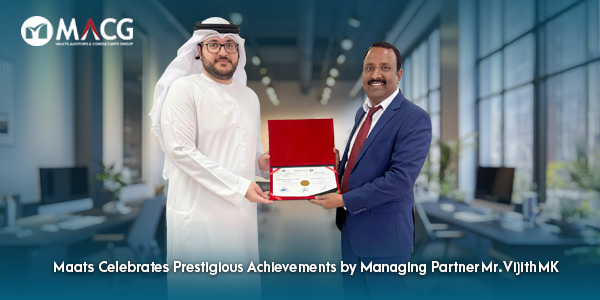
Maats Auditors and Consultants Group Celebrates Prestigious Achievements by Managing Partner Mr. Vijith MK

We are thrilled to announce that our Managing Partner, Mr. Vijith MK, has been honored with the prestigious Fellowship from the UAE Accountants and Auditors Association (AAA). This esteemed recognition highlights his exceptional professional expertise, leadership, and dedication to the field of accounting and auditing. In another significant milestone, Mr. Vijith MK has also been awarded the Auditor Certificate from the UAE Ministry of Economy, reinforcing his credentials and our firm’s commitment to excellence, compliance, and superior auditing standards. These accolades not only reflect Mr. Vijith’s individual accomplishments but also elevate Maats Auditors and Consultants Group’s reputation as a trusted leader in the industry. We take immense pride in his achievements and remain committed to upholding the highest standards of integrity, professionalism, and service excellence. At Maats, we continue to strive for innovation, regulatory compliance, and client success, guided by visionary leadership and a team of highly skilled professionals.

tax

Is Your Rental Income Taxable? Understanding the Rules for Natural Persons

With the introduction of the Corporate Tax regime in the UAE, natural persons engaging in both business and real estate activities may be unsure of how their income is taxed. One common area of confusion is whether rental income becomes subject to Corporate Tax if the individual already conducts a licensed business activity. To provide clarity, the Federal Tax Authority (FTA) released the Corporate Tax Guide for Real Estate Investment by Natural Persons (CTGREI1). This guide outlines when real estate income earned by individuals is considered a taxable business activity and when it is not. This blog post explores these rules in detail, especially in cases where a natural person operates a licensed business and separately owns income-generating property. Corporate Tax and Real Estate Income: What the CTGREI1 Says According to the CTGREI1 guide, rental income derived by a natural person in their personal capacity is generally not subject to Corporate Tax, provided that this income is not earned through a licensed business activity. The Corporate Tax regime is designed to apply to business income. If an individual’s rental income stems from personal ownership of property, where no commercial license is required, that income is considered passive and outside the scope of Corporate Tax. This remains true even if the individual simultaneously carries on an entirely separate licensed business activity, such as retail, hospitality, or consulting. Key Conditions for Non-Taxable Rental Income To ensure rental income remains non-taxable under Corporate Tax, the following conditions must generally be met: As long as these conditions are satisfied, rental income is not regarded as business income, and thus, not subject to Corporate Tax, even if the person is otherwise registered for tax due to another business. What Is Taxed and What Is Not? It’s important to distinguish between taxable business income and non-taxable passive income. Business income that is earned through a licensed activity is subject to Corporate Tax in the UAE. This includes any income generated from activities that require a commercial license, such as operating a shop, consultancy, or other formal business operations. On the other hand, rental income earned by a natural person from property held in their personal name—where no commercial license is required—is not subject to Corporate Tax. This type of income is considered passive and falls outside the scope of taxable business activities under the current guidelines.                                The licensed activity may require the individual to register for Corporate Tax, but this does not automatically affect the tax treatment of unrelated rental income from property held in a personal capacity. When Does Rental Income Become Taxable? Although most personal real estate income is exempt, there are certain conditions under which it could become taxable: The key distinction lies in intent, scale, and licensing. Leasing one or two residential units generally does not qualify as a business. However, managing multiple properties, operating short-term rentals, hiring staff, or running a formal real estate operation could cross the threshold into taxable activity. What Are the Compliance Obligations? For natural persons who only derive rental income passively and do not engage in real estate as a business, there is: However, if the individual is conducting another business under a license (e.g., retail, consulting, etc.), they must: Maintaining this separation is crucial for compliance and for avoiding confusion during audits or reviews. Summary and Final Thoughts The UAE’s Corporate Tax regime is designed to be clear and business-focused. The CTGREI1 guide reinforces the principle that passive real estate income earned by natural persons in their own name, and without the need for a license, is not subject to Corporate Tax. Key takeaways: As the tax landscape evolves, business and real estate individuals should periodically review their structure and ensure they remain aligned with the latest FTA guidance. Staying informed, organized, and compliant will protect against unnecessary tax exposure while taking full advantage of the UAE’s investor-friendly framework.

Corporate Tax

UAE to waive late registration Penalties Under Corporate Tax Law

MoF and FTA Introduced Corporate Tax Penalty Waiver Initiative to Boost Compliance As per the press release in the UAE, the Ministry of Finance (MoF) and the Federal Tax Authority (FTA) have announced a new Cabinet Decision that waives administrative penalties for corporate taxpayers and certain exempt persons who missed the deadline for tax registration. This initiative is part of the government’s proactive approach to encourage compliance while easing the financial burden on businesses, particularly during the first year of corporate tax implementation. Key Details of the Initiative To benefit from the penalty waiver, eligible taxpayers must: Additionally, the FTA has confirmed that administrative fines already paid by qualifying entities will be refunded, further incentivizing timely compliance. Why This Decision Matters The UAE’s corporate tax regime is still in its early stages, and this initiative reflects the government’s commitment to: By offering this waiver, authorities aim to minimize challenges for companies adapting to the new tax system while reinforcing the importance of adherence to regulatory deadlines. A Step Toward a Stronger Tax Ecosystem This decision aligns with the UAE’s broader strategy to enhance tax compliance without imposing undue pressure on businesses. It also demonstrates the government’s willingness to listen to market needs and adjust policies to ensure a smooth transition into the corporate tax framework. For eligible businesses, this is an opportunity to rectify past delays without penalties, ensuring they remain in good standing with the FTA. Looking Ahead As the UAE continues refining its tax system, businesses should stay informed about regulatory updates and deadlines. Partnering with corporate tax accounting firms UAE and experienced corporate tax consultants in Dubai ensures proactive compliance, which not only avoids penalties but also supports a more transparent and efficient economic environment. Companies seeking growth can benefit from expert guidance on Corporate Tax Accounting Services in the UAE and specialized Corporate Tax Accounting Services in Dubai, tailored to meet local requirements. Whether working with established corporate tax accounting firms in Dubai or exploring opportunities such as company setup in Meydan Free Zone, aligning with trusted corporate tax consultants in Dubai helps businesses remain compliant while focusing on expansion and long-term success.

corporate tax update 2024 UAE, corporate tax 2024 penalty, Maats accountants
Corporate Tax

Timeline for Submitting Corporate Tax Registration Application For Business In UAE

Timeline for Submitting Corporate Tax registration application for business in the UAE All Taxable Person shall apply for Corporate Tax Registration in accordance with the timelines prescribed by the federal tax authority which are as follows. Timeline for Resident Juridical Persons (Existing licensees incorporated before 01st March 2024) Date of issue of License Deadline for submitting CT application 1 January – 31 January 31-May-2024 1 February – 28/29 February 31-May-2024 1 March – 31 March 30-Jun-24 1 April – 30 April 30-Jun-24 1 May – 31 May 31-Jul-24 1 June – 30 June 31-Aug-24 1 July – 31 July 30-Sep-24 1 August – 31 August 31-Oct-24 1 September – 30 September 31-Oct-24 1 October – 31 October 30-Nov-24 1 November – 30 November 30-Nov-24 1 December – 31 December 31-Dec-24 Where a juridical person has more than one License, the License with the earliest issuance date shall be used. New Licensees incorporated after 01st March 2024 Category Deadline UAE licenses including FZE licenses 3 months from date of registration Foreign licensees with management and control in UAE 3 months from end of financial year Non residents juridical persons (existing) before 01stMarch 2024 Category Deadline A person that has a Permanent Establishment in the State 9 months from the date of existence of the PE A person that has a nexus in the State 3 months from March 1st, 2024, i.e., May 2024 Non residents juridical persons (existing) before 01stMarch 2024 Category Deadline A person that has a Permanent Establishment in the State 6 months from the date of existence of the PE A person that has a nexus in the State 3 months from date of establishment of the nexus   Natural person (including sole establishment) Category Deadline Resident natural person conducting business during 2024 and onwards exceeding AED 1 million. 31st March of subsequent calendar year. Non resident natural person conducting business during 2024 and exceeding AED 1 million. 3 months from date of meeting the requirements. Penalty for Late Registration Where a Persons fail to submit a Tax Registration application as per the timelines stated above, Administrative Penalties shall be applied in accordance with Cabinet Decision No. 75 of 2023 referred to above, which is AED 10,000

Business Setup

Office Spaces in DMCC: Tailoring Your Business Environment

Understanding DMCC Office Spaces: A Spectrum of Possibilities Within DMCC, a spectrum of office spaces awaits, offering tailored solutions for businesses of every scale. Dynamic coworking spaces provide flexibility and collaboration hubs for startups and freelancers. Private offices offer dedicated, secure environments, ideal for SMEs seeking privacy and professionalism. For large enterprises, corporate suites present luxurious spaces with advanced amenities, elevating their brand presence. DMCC’s diverse options ensure that whether you’re a budding startup, a growing SME, or a corporate giant, there’s an office space designed to meet your unique needs, fostering an environment conducive to productivity, innovation, and success. Flexibility in Size and Design: Adapting to Your Business Dynamics DMCC’s office spaces redefine adaptability by offering businesses the flexibility to scale their office sizes according to evolving needs. This unique feature allows companies to seamlessly adjust their spatial requirements, accommodating growth or streamlining operations as business dynamics change. The result is enhanced efficiency and cost-effectiveness, as businesses no longer need to commit to fixed, static spaces. This scalable approach aligns with the agile nature of modern enterprises, empowering them to optimize their workspace in real-time, ensuring resources are utilized efficiently and costs are aligned with actual requirements, fostering a dynamic and responsive business environment. Coworking Spaces: Fostering Collaboration and Innovation Coworking spaces within DMCC emerge as vibrant ecosystems fostering collaboration, networking, and innovation. Ideal for startups, freelancers, and businesses, these spaces transcend traditional office setups, encouraging dynamic interactions and idea exchange. The open environment nurtures a culture of innovation by breaking down silos and promoting cross-industry collaboration. DMCC’s coworking spaces not only provide cost-effective solutions but also serve as incubators for creativity. With shared amenities and events, professionals within these spaces find unparalleled opportunities to network, forming connections that transcend traditional business boundaries. In DMCC’s coworking realm, the emphasis is not just on shared desks but on shared experiences, propelling businesses toward collaborative success. Private Offices: Tailored Privacy for Growing Enterprises Private offices in DMCC offer a haven for businesses, providing dedicated and secure spaces conducive to focused work. Beyond mere functionality, these offices stand out as customizable havens, allowing companies to shape their environment in alignment with their brand identity. This unique feature not only fosters a sense of ownership but also exudes professionalism. Businesses can curate an exclusive atmosphere that reflects their values and ethos, creating a workspace that goes beyond functionality to become a true extension of their brand. In DMCC’s private offices, the advantages extend beyond privacy, offering a canvas for businesses to imprint their distinctive mark. Corporate Suites: Elevating Your Brand Image Corporate suites in DMCC epitomize luxury, tailored for established enterprises seeking a prestigious business address. Beyond a mere workspace, these suites offer a heightened experience with added amenities and services, transforming the environment into a premium business domain. From exclusive meeting rooms to concierge services, every detail is designed to elevate the corporate experience. The allure lies not just in the opulence of the physical space but in the curated services that enhance convenience and efficiency. In DMCC’s corporate suites, businesses find more than an address; they discover a distinguished setting conducive to high-profile meetings and a superior standard of operations. Strategic Location: The Power of a DMCC Business Address Having an office in DMCC, at the heart of Dubai’s central business district, provides a strategic advantage that goes beyond a mere physical location. A DMCC business address is a symbol of prestige, instilling confidence in clients and partners alike. The association with this renowned free zone signifies a commitment to excellence and positions businesses at the epicenter of dynamic economic activities. Moreover, a DMCC address opens doors to unparalleled networking opportunities, connecting enterprises with a diverse community of professionals and organizations. It’s not just an office; it’s a gateway to influence, establishing a powerful presence within a thriving business ecosystem in one of the world’s most sought-after locations. Amenities and Lifestyle: Beyond Just Office Spaces DMCC offers more than just office spaces; it provides a holistic work-life balance through a spectrum of lifestyle amenities. From diverse dining options to state-of-the-art fitness centers and inviting recreational spaces, professionals within the DMCC community enjoy an environment that nurtures well-being. These amenities seamlessly integrate into the workday, allowing individuals to rejuvenate, socialize, and unwind, fostering a vibrant community spirit. The emphasis on lifestyle enhances not only the productivity of professionals but also contributes to a thriving, interconnected community where work and life harmoniously coexist, creating an environment that attracts and retains top talent within the dynamic landscape of DMCC. Cost-Effective Solutions: Maximizing Value for Your Investment Examine the cost-effectiveness of selecting office spaces in DMCC, offering a variety of options to accommodate diverse budgetary constraints. Evaluate how businesses can optimize value by strategically choosing the most suitable office solution tailored to their specific needs. This exploration delves into the range of choices available within DMCC, providing insights into how businesses can make informed decisions to align their workspace expenses with their financial goals, ensuring both functionality and affordability. By navigating the diverse options, businesses can uncover the ideal office solution that not only meets their operational requirements but also maximizes overall value within their allocated budget. Networking Opportunities: Building Connections Within DMCC Discover the distinctive networking prospects cultivated by the diverse DMCC office community. Delve into the collaborative atmosphere, unraveling how the shared environment not only encourages partnerships but also propels business growth. In this exploration, grasp the essence of networking within DMCC, where professionals from various industries converge to forge valuable connections, exchange ideas, and catalyze mutual success. The shared workspace becomes a nexus for collaboration, offering a dynamic platform where businesses intersect, synergize, and flourish within the thriving community of DMCC. In the intricate dance of business success, the stage upon which it unfolds is as vital as the actors themselves. DMCC office spaces provide not just a physical location but a canvas for businesses to shape their culture, foster innovation, and build a brand that resonates with success. By tailoring

challenges in mainland company formation, maats accountant and consultants
Mainland Company

Common Challenges in Mainland Company Formation: How To Overcome Them With Expert Business Setup Consultant

In the dynamic landscape of business, setting up a mainland company presents entrepreneurs with a myriad of opportunities and challenges. While the prospect of tapping into a broader market and enjoying increased flexibility is enticing, it’s essential to be aware of the common challenges associated with mainland company formation. Here, we outline the challenges and investigate how collaborating with a business setup consultant can facilitate a more seamless and successful launch of your business. 1. Regulatory Complexities and Compliance Hurdles Forming a mainland company involves navigating a complex web of regulations and legal requirements. From licensing to permits and compliance with local laws, the regulatory landscape can be overwhelming for entrepreneurs. A business setup consultant acts as a guide, helping businesses understand and adhere to the intricate regulatory framework. Their expertise ensures that all legal obligations are met, reducing the risk of compliance-related issues. 2. Documentation Overload and Administrative Burden The paperwork involved in mainland company forAmation can be extensive and time-consuming. Entrepreneurs may find themselves inundated with various documents and administrative tasks. A business setup consultant streamlines this process by managing the documentation and administrative burden. Their experience in handling paperwork efficiently not only saves time but also reduces the likelihood of errors that could lead to delays or complications. 3. Financial Planning and Budgeting Challenges Effective financial planning is crucial for the success of any business, but establishing a mainland company requires careful budgeting and financial strategizing. A business setup consultant brings financial acumen to the table, assisting entrepreneurs in developing realistic budgets, forecasting expenses, and ensuring adequate capitalization. This proactive approach helps businesses navigate the financial challenges associated with the initial stages of company formation. 4. Location Selection Dilemmas Choosing the right location for your mainland company is a pivotal decision that can significantly impact your business. Entrepreneurs may grapple with factors such as accessibility, infrastructure, and proximity to target markets. A business setup consultant conducts a thorough analysis, considering these factors and providing strategic insights to help businesses make informed decisions about the most suitable location for their operations. 5. Cultural and Language Barriers Entering a new market often means dealing with cultural nuances and language barriers. This can be a challenge when establishing and managing a mainland company. A business setup consultant with local expertise can bridge these gaps, providing valuable insights into cultural norms, business etiquette, and facilitating communication with local authorities. This ensures a smoother integration into the local business environment. 6. Lack of Industry-Specific Knowledge Different industries come with unique challenges and requirements. Entrepreneurs venturing into unfamiliar territory may lack the industry-specific knowledge needed for successful company formation. A business setup consultant with experience across various industries brings valuable insights, tailoring the setup process to align with the specific needs and challenges of the business’s niche. 7. Strategic Planning and Market Entry Strategies Establishing a mainland company requires a well-thought-out strategy for market entry and growth. Entrepreneurs may face challenges in developing a strategic plan that aligns with their business objectives. A business setup consultant collaborates with businesses to formulate effective market entry strategies, identify potential challenges, and create a roadmap for sustainable growth. 8. Network and Local Partnering Difficulties Building a network and establishing partnerships with local entities can be challenging, especially for businesses entering a new market. A business setup consultant leverages their network and connections to facilitate introductions and collaborations. This strategic networking can open doors to potential clients, suppliers, and valuable partnerships, fostering a supportive business ecosystem. How a Business Setup Consultant Can Help Overcome These Challenges   Expert Guidance and Local Knowledge: A business setup consultant provides expert guidance and leverages their local knowledge to navigate regulatory complexities, ensuring compliance and a smooth company formation process. Efficient Documentation Management: By handling the extensive paperwork efficiently, a consultant minimizes administrative burden, reducing the risk of errors and delays in the company formation process. Financial Expertise: With financial acumen, a consultant assists in effective budgeting and financial planning, ensuring that businesses are adequately capitalized for a successful launch. Strategic Location Selection: Conducting a thorough analysis, a consultant helps businesses make informed decisions about the most strategic location for their operations. Cultural Liaison and Communication Facilitation: A consultant acts as a cultural liaison, offering insights into local norms and facilitating communication with local authorities, addressing language barriers effectively. Industry-Specific Insights: With experience across various industries, a consultant provides industry-specific knowledge, tailoring the setup process to meet the unique challenges of the business’s niche. Strategic Planning and Roadmap Development: Collaborating with businesses, a consultant assists in the development of strategic plans, identifying challenges, and creating a roadmap for sustainable growth. Networking and Partner Facilitation: Leveraging their network, a consultant facilitates introductions and collaborations, helping businesses build connections with potential clients, suppliers, and partners. Empowering Success Through Expert Guidance Of Maats Business Setup Consultant Establishing a mainland company comes with its share of challenges, but with the right support, entrepreneurs can turn these challenges into opportunities for growth. Maats Business Setup Consultant brings invaluable expertise, navigating complexities, and providing strategic guidance throughout the company formation journey. By partnering with us, businesses can overcome obstacles, streamline processes, and set the stage for a successful and sustainable presence in the dynamic landscape of mainland company formation.

free zone company setup, free zone business setup, business setup in UAE
free zone business setup

Benefits of Establishing a Free Zone Company in UAE

If you’re an expat with those grand business ambitions and a penchant for the Middle East, then consider establishing a free zone company in Dubai! A free zone opens a gateway to a world of unprecedented advantages and incentives, making it an appealing option for businesses looking to expand or set up operations in the region. Excited to know about the array of benefits these zones have to offer? Let’s explore! 100% Foreign Ownership One of the most attractive facets of establishing a Free Zone Company in the UAE is the provision for 100% foreign ownership. This exceptional policy liberates international investors from the constraints often associated with shared ownership. By eliminating the need for local partners or sponsors, these zones offer an environment where global entrepreneurs can confidently shape their enterprises.  In Free Zone Company formation, entrepreneurs and investors can enjoy the privilege of 100% ownership of their business. This means they have full control over the company’s operations and profits, without the need for a local sponsor. It’s a key advantage of establishing businesses in free zones, providing greater autonomy and flexibility. Get Tax Exemptions Free Zone entities enjoy substantial tax benefits, including zero corporate and personal income taxes for a specific period, usually ranging from 15 to 50 years, depending on the Free Zone. This favorable tax environment is a major incentive for entrepreneurs and investors, reducing the financial burden and increasing the profitability of their ventures. It allows companies to reinvest their earnings and thrive in a tax-efficient ecosystem, making free zones an attractive choice for business expansion and growth. Customs Duty Benefits Companies within Free Zones benefit from customs duty exemptions on imports and exports. This paves the way for businesses to engage in more cost-effective and efficient cross-border transactions. These custom duty benefits make free zones an attractive destination for trade-oriented industries, enabling companies to efficiently manage their supply chains and enhance their profit margins Simplified Import and Export Procedures Free zone company formation in the UAE comes with simplified import and export procedures. Businesses can import goods without the need for a local sponsor, and they often enjoy customs duty exemptions or lower rates within the free zone. Exporting from a free zone is straightforward, with minimal paperwork and efficient processes. These simplified procedures enhance the UAE’s appeal as a global trade and logistics hub, facilitating international commerce for businesses in the region. By simplifying customs procedures, bureaucratic complexities get eliminated, resulting in a seamless flow of goods across borders. This advantage significantly reduces the time and resources otherwise spent navigating intricate customs regulations. Great Infrastructure and Facilities These zones boast state-of-the-art amenities, including modern office spaces, well-equipped warehouses, and top-tier communication networks. Such exceptional infrastructure accelerates the setup and expansion of businesses, Business Setup in UAE made easy Setting up a Free Zone Company in the UAE is straightforward and relatively quick, with minimal paperwork and fewer regulatory obstacles.  company formation. Geographic Advantage Positioned at the crossroads of major global trade routes, UAE’s Free Zones benefit from a highly strategic location that serves as a gateway to both regional and international markets. Repatriation of Profits Businesses can repatriate 100% of their profits and capital, ensuring a seamless flow of funds back to their home country.  Repatriation of profits is a key advantage of company formation in the UAE. Businesses can transfer their earnings abroad without restrictions, allowing for efficient capital management. This freedom to repatriate profits is governed by UAE law and reinforces the country’s appeal as a business-friendly destination for both local and international investors, encouraging foreign investment and economic growth. No Currency Restrictions There are no currency restrictions within Free Zones, enabling businesses to transact in various currencies without limitations. Supports a wide range of Business Activities UAE Free Zones cover a diverse array of industries and sectors, allowing companies to choose the one that aligns with their expertise and business model. Intellectual Property Protection Robust intellectual property laws and regulations safeguard businesses’ patents, trademarks, copyrights, and trade secrets. Hire a Talented Workforce It offers a diverse and skilled labour pool, making it easier for companies to find qualified employees to support their operations. High-Quality Lifestyle The UAE’s modern lifestyle, world-class amenities, and multicultural environment make it an attractive destination for expatriate employees. Overall, establishing a Free Zone Company in the UAE provides a favourable business environment with a range of incentives that can significantly contribute to a company’s growth, expansion, and success.

Scroll to Top